
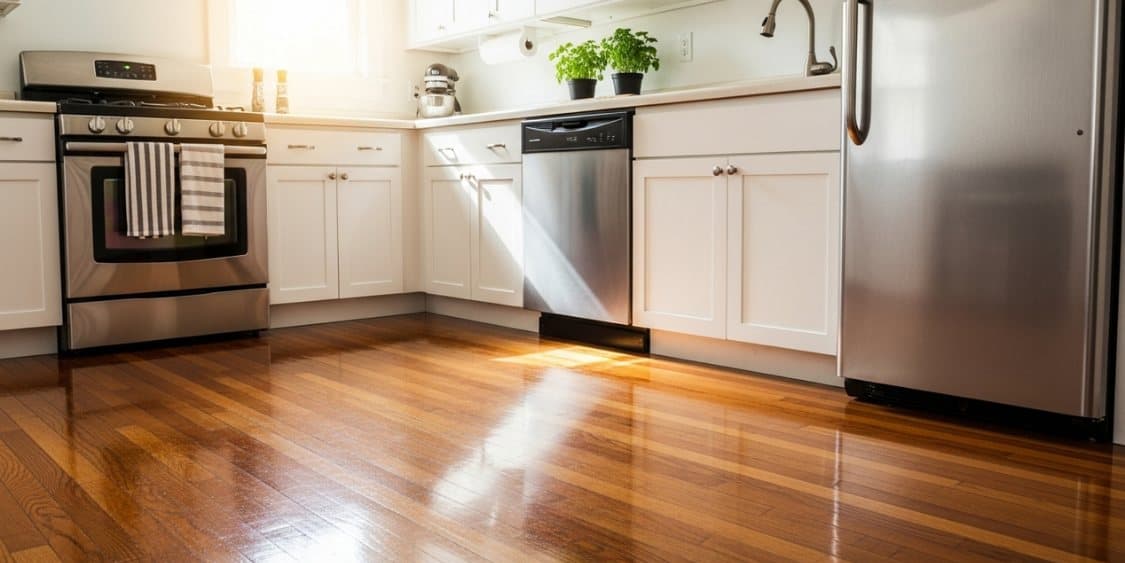
Slide the sofa out from the wall and look at the strip of floor it's been sitting on. Then look at the path between the kitchen and the back door. If the hidden strip still has a soft glow and the path looks flat and gray, you've just diagnosed most dull hardwood floors. The finish under the sofa is the same finish. Something is sitting on top of the one in the walkway, or something has been wearing it down.
The good part is that "something on top" is very often fixable with a cleaning.
The shine comes from the finish
Wood itself doesn't shine much. The glow comes from the clear finish on top, usually polyurethane on site-finished floors or a factory coat on prefinished and engineered boards. That finish is what light bounces off.
Finishes also come in different sheens. A satin or matte floor was never supposed to look like glass, and no amount of cleaning will make it do that. What you're looking for is an even sheen across the room. Cloudy patches, streaks, a slightly tacky feel under bare feet, or traffic lanes that look duller than the corners all point to buildup or wear.
Residue is the most common culprit
We'd put money on this one. Most of the cloudy floors we see in Dentsville are coated in product.
Mop-and-shine products, oil soaps, paste waxes, and heavily scented floor cleaners can each leave a film. At first the floor looks brighter. A few weeks later that film has grabbed dust and turned hazy, so you mop again with the same product and add another layer. Repeat for a couple of years and you get a floor that looks dirty an hour after you clean it.
Dirty mop water does a version of the same thing. Once the bucket turns gray, you're spreading soil around and leaving it to dry in a thin coat.
If your floor feels slightly sticky or squeaks under a sock, residue is the likely answer.
Grit and scratches
Sand and fine grit act like sandpaper under shoes. Every trip across the floor drags a little of it against the finish, and over time that leaves thousands of tiny scratches. One scratch is invisible. A few thousand scatter light in every direction, and the floor looks flat.
Around here, the sandy soil in a lot of yards gets tracked in on shoes and paws, so the entry and the back door take the worst of it. Kitchens are close behind, because of the foot traffic and the crumbs.
Cleaning removes the grit and the film around the scratches, which makes light scratches much less noticeable. It doesn't erase them. Deep scratches and gouges are a repair job.
Moisture and sun
Hardwood and water don't get along. Small spills wiped up quickly are fine. Wet mopping every week is not. Water left standing can work into the seams between boards, dull the finish in patches, and over time lead to cupping or swelling.
Steam mops are a common offender. They push hot moisture into the seams, and many floor manufacturers say not to use them.
Midlands humidity plays a part too. Wood takes on moisture in our long, damp summers and gives it up when the heat runs in winter, so boards swell and shrink a little every year. Seams open slightly and collect dirt. Keeping the house somewhere around 35 to 55 percent humidity with the AC or a dehumidifier helps the floor stay stable.
Sun is the last one. Strong light through a big window can fade some woods and darken others, which is why the spot under a rug often looks like a different color. That's a change in the wood, and cleaning won't reverse it. Rotating rugs and using blinds on the sunniest windows helps the floor age evenly.
Pets
Dog nails make fine scratches, especially on softer woods. Paws bring in grit. Coat oils leave smudges near where pets lie down. And urine that sits in a seam can stain and smell, sometimes for good if it soaks into bare wood at the edges.
Trim nails, put a washable mat under the water bowl, and wipe up accidents fast with a barely damp cloth. If an accident has already turned the wood dark, that's a stain in the wood, and it's a question for a flooring contractor.
What our cleaning does, and what it doesn't
Our hardwood floor cleaning is a pH-neutral, low-moisture clean that's safe for finished hardwood, engineered floors, and prefinished boards. The technician looks over the floor first and points out anything that's beyond cleaning. Then the loose grit comes off so nothing gets dragged around. Next comes the cleaning solution, scrubbed over the floor with a soft-bristle machine that gets along the seams and edges where film collects. Very little water touches the wood, so it dries fast.
No sanding, no refinishing, and no coating or polish goes on top. Most of the dull floors we see only need the old product taken off, and frankly that's the cheaper fix anyway.
Now the limit. If the finish is worn through to gray wood in the traffic lanes, if it's peeling or flaking, if boards are deeply gouged, or if there's water damage, cleaning will make the floor cleaner but it won't bring the shine back. That floor needs a refinisher. We'll tell you that up front, before you pay for a cleaning that can't give you what you want. Safe-Dry's hardwood site, hardwood-restore.com, goes deeper on what a cleaning can and can't do for wood floors.
Keeping it bright afterward
A few habits make a cleaned floor stay that way:
- Sweep or vacuum several times a week with a soft brush or a hard-floor setting, with no beater bar.
- Mats inside and outside the main doors, shaken out often.
- Felt pads under chair and table legs, replaced when they get gritty.
- A cleaner made for finished wood, used sparingly, with a damp mop and never a wet one.
- Leave the oil soap and anything sold as a shine booster at the store, unless your floor's maker calls for it.
- Shoes off at the door if your household will go along with it.
Most homes do well with a professional clean once or twice a year. A house with two dogs and a lot of cooking may want it every six months.
Our hardwood coupon is $50 off. First, though, try the sofa test from the top of this post. If the hidden strip looks good, there's a solid chance the rest of the floor can look like that again. Give us a ring at 803-310-3848 with a rough count of the rooms that have wood.