Hang a squeegee on a hook inside the shower, at eye level, where nobody can miss it. That tool, used for 30 seconds after each shower, will do more for bathroom tile than any spray you can buy. Most of the cloudy film on a shower wall is stuff that dried there. Take the water off before it dries and most of the film never forms.
What soap scum is made of
It's a mix. Traditional soap reacts with the calcium and magnesium in tap water and forms a chalky solid. Body oils, shampoo, and shaving cream get stirred in. Every time the water dries off the wall, a thin layer of that mix stays behind. Days later, you've got a haze. Months later, you've got a crust that laughs at a sponge.
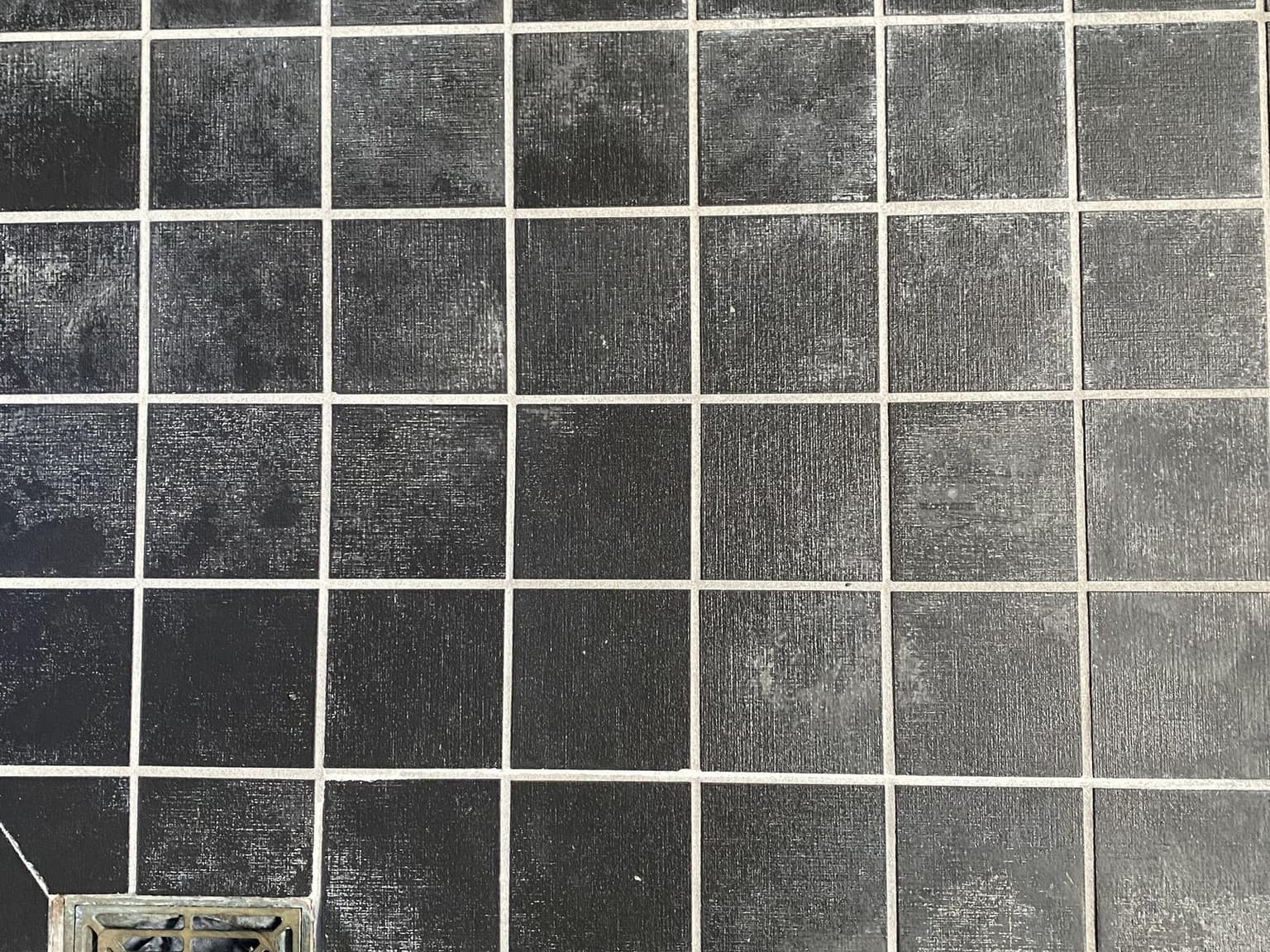
Grout catches more of it than tile does. It's rougher, it's porous, and it sits a little lower than the tile face, so water runs into it and sits there. That's why the grout on the lower third of a shower wall usually goes dark first.
The busiest bathrooms get it worst. In a house where three people shower between 6 and 8 a.m., the walls barely dry between uses, the bath mat never really dries at all, and the room stays steamy most of the morning. Nobody's housekeeping is to blame there. A bathroom like that simply works hard.
A two-minute routine after showers
You don't need to do all of these every time. Doing most of them most days is plenty.
- Before you turn the water off, rinse the walls where shampoo and soap ran down, and the ledges where bottles sit.
- Squeegee the walls top to bottom, one strip at a time. You're after most of the water, not every drop.
- Wipe corners, niches, and the tub edge with a microfiber cloth. Water pools there and the squeegee can't reach.
- Run the exhaust fan during the shower and leave it on for a while afterward. If the mirror is still fogged 20 minutes later, the fan may need cleaning or the room needs more airflow.
- Hang towels spread out, and drape the bath mat over the tub so both can dry.
- Every week or so, lift the bottles and wipe under them. A shower caddy that drains beats a crowd of bottles in the corner.
Cleaning what's already there
Thin soap film comes off easily. Thick buildup is a different job, and that's where people get into trouble.
Pick one cleaner made for your type of tile and use it alone. Ceramic and porcelain tolerate most bathroom cleaners. Natural stone like marble or travertine is a different story: vinegar and other acids can etch it, and abrasive powders can scratch the polish. Read the label, and test anything new in a corner first.
Never mix cleaning products. Bleach and ammonia, or bleach and an acid, can release fumes that are dangerous to breathe in a small room. If one product isn't working, adding a second product isn't the answer. Open a window while you clean, wear gloves if the label says to, and put the stronger stuff away if it hasn't helped.
For the grout itself, slow down and let the cleaner work. Apply it to a small section, give it the contact time the label calls for, then scrub with a grout brush. Use soft or medium bristles. A wire brush or a stiff scrubbing pad will wear the grout down over time, and you'll be replacing grout in a few years. Wipe the loosened grime away before the cleaner dries again, rinse, and let the room air out.
If you've scrubbed one section carefully twice and it's still dark, the buildup is deeper than a hand brush will reach. Grinding harder at it mostly damages grout.
When it's time for the buffer
Some bathrooms get past the point where routine cleaning makes a dent. The haze comes back the day after you clean. The grout stays dark no matter what. The corners never look right.
That's what our tile cleaning service is for. On the bathroom floor we use a machine buffer, which scrubs the tile face and works down into the grout lines with steady, even pressure, and then the loosened buildup comes up. It's a lot of scrubbing compressed into a short visit, and it's gentler on grout than a homeowner leaning on a stiff brush for an hour. Kitchen and laundry room floors get the same method. For the shower walls themselves, the technician will look at the tile and tell you what can be done there before any work starts.
To get ready, clear the floor of mats and the trash can, and pull the bottles out of the tub area. Point out any cracked grout, loose tiles, or failing caulk when the technician arrives. Cleaning won't fix those. A tile contractor will. We'll mention them during the walkthrough so you know what to expect from the result.
Stopping the scum from building back up
Once the bathroom has been reset, the routine above keeps it that way, and it's much easier to keep a clean floor clean than to dig out of months of film. A busy family bathroom usually needs us about once a year. A guest bath that sees a shower twice a month can go a lot longer.
The tile coupon is $45 off. If your main bathroom is the problem and the hall bath is fine, tell us that when you reach out through the contact page, and we'll price just the room that needs it.