
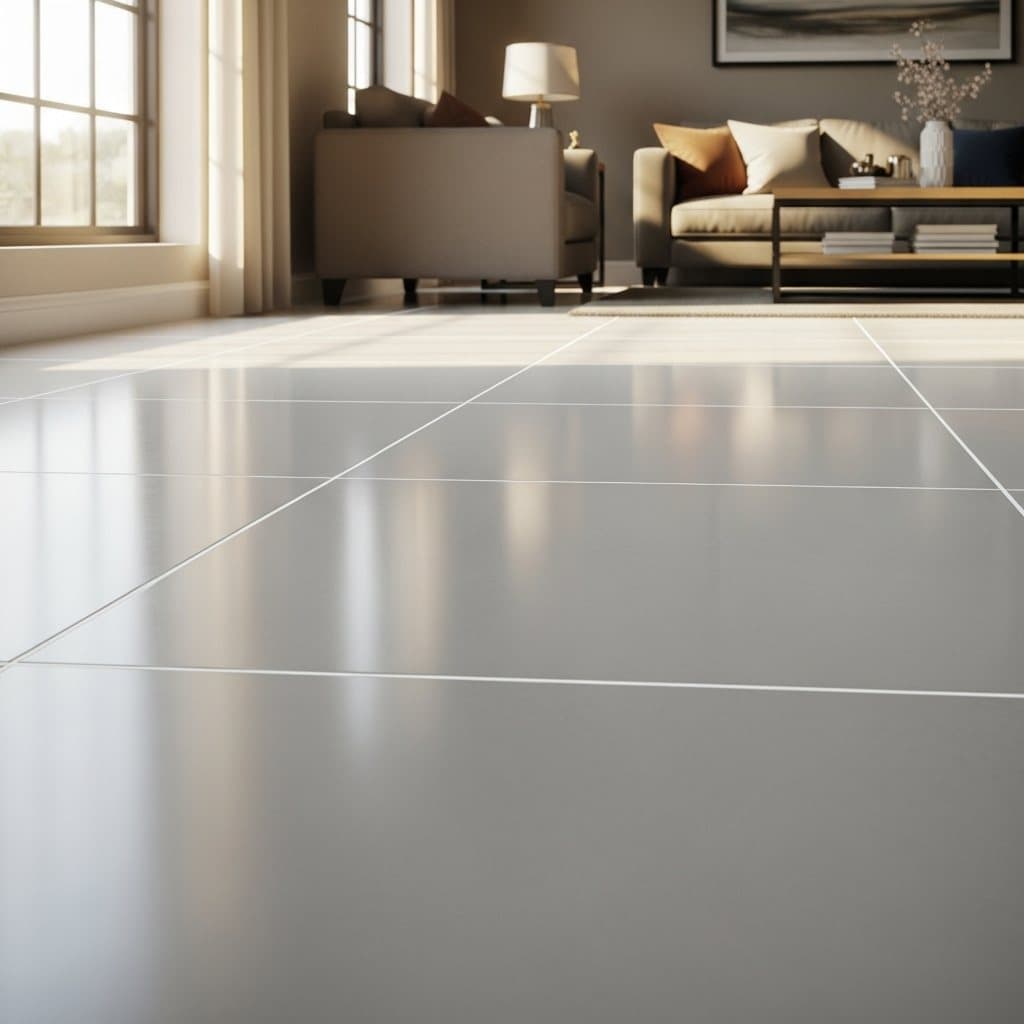
Grout is the lowest point on a tile floor. Every grain of dirt, every drop of mop water, and every splash of cooking oil on that floor eventually rolls or gets pushed toward the joints. Add the fact that most grout is cement-based and full of tiny pores, and you've got a material that's built to collect whatever lands near it.
So when the tile looks fine and the lines between it have gone gray or brown, the grout is doing exactly what grout does. The question is what got into it, because the answer changes how you keep it clean.
The five usual suspects
Grit from shoes and paws
This is the big one anywhere people come in from outside. Sand and soil come in on shoes, and in northeast Richland County a lot of that is sandy dirt with some red clay mixed in. Each step grinds those particles into the joints, where they pack down and stain. Sweeping gets the loose stuff. Once it's down in the pores, a broom does nothing.
Kitchen grease
Cooking puts a fine mist of oil in the air, and it settles on the floor around the stove. Add the drips from pans and the splash from the sink, and the grout near the range picks up a sticky film. Oil never evaporates, so it stays tacky and grabs dust, which is why the grout in front of the stove is often the darkest in the house.
Soap film and cleaner residue
Shampoo, body wash, and bar soap react with minerals in the water and leave a film on bathroom tile and grout. On floors, the same thing happens with too much floor cleaner, or with products that promise shine. The residue dries in the joints and catches dirt. We wrote a whole post on the bathroom side of this: soap scum on tile and grout.
Moisture and mildew
Bathrooms and laundry rooms stay damp more than people think, and Midlands humidity doesn't help a room dry out. Where moisture hangs around, mildew grows, and it shows up as black or dark gray along the grout, often in corners and along the tub.
Hard water
Minerals left behind when water evaporates build a whitish or dark crust, depending on what they mix with. Look around the tub, the base of the shower, and the floor under a pet's water bowl. Combined with soap and soil, minerals make some of the most stubborn buildup we clean.
What you can do at home
A few habits slow all five down.
Sweep or vacuum tile several times a week, more in the entry and kitchen. Dry soil is what grinds into the joints, so getting it up before anyone walks on it matters most.
Mop damp, not wet. Use a pH-neutral cleaner made for tile, use less than the label says, and change the water as soon as it looks cloudy. A wet mop with dirty water is the single fastest way to turn light grout dark, because it washes soil straight into the lowest point of the floor and leaves it there to dry.
Wipe kitchen spills right away, and give the floor in front of the stove a quick wipe after heavy cooking.
In bathrooms, run the fan during the shower and for 20 minutes after. Squeegee the walls. Fix drips and leaks.
Put mats at every outside door and wash them now and then, so they don't turn into a source of grit themselves.
Skip the bleach. It can lighten mildew stains, but it doesn't remove packed-in soil, and repeated use can weaken grout and blotch colored grout. Steam mops have their own problem: they push hot water into the pores with nothing to pull the dirty water back out. Vinegar and other acids can etch natural stone like travertine or marble, so check what your tile is before you reach for them.
How our buffer clean gets it out
At some point the grout is dark all the way down, and no amount of mopping changes it. That's where tile and grout cleaning comes in.
We use a machine buffer method. The technician walks the floor with you first, notes the problem spots, and checks for cracked or missing grout and for natural stone that needs a gentler touch. The loose soil comes up. Then a cleaning solution goes down, and the buffer scrubs it across the tile and down into the joints, breaking up grease and packed-in grit that a hand brush can't reach in any reasonable amount of time. The loosened grime comes up off the floor, and edges and corners get worked by hand.
What you should expect: grout that's a lot lighter and a floor that feels clean under bare feet. What you shouldn't expect is brand-new grout. Grout that's cracked, crumbling, or missing needs a tile contractor, and very old grout may have some permanent staining. We'll point those out before we start, along with the price.
If you want to read more about how the buffer method works, Safe-Dry's tile site, tile-done-right.com, walks through it.
How often
Kitchens and the main bathroom usually do well with a professional clean once a year. A house with kids or pets, or a busy entry, may want it every six to nine months. A better sign than the calendar: if the grout darkens again within a few days of mopping, or the floor feels a little sticky, the buildup has gotten ahead of you.
Our tile coupon is $45 off. Can't tell if your grout is dirty or just old? Then call 803-310-3848 and describe what you're seeing, and we'll give you a straight answer on whether a cleaning will help.