Most water rings on a couch come from the cleanup. The accident only started things. Someone sees a wet spot, grabs a sponge and a bowl of soapy water, scrubs the middle hard, and an hour later there's a pale brown halo twice the size of the original stain.
Upholstery is built for comfort. It holds moisture in the fabric and the cushion fill, it hides what's going on underneath, and it shows every uneven edge as it dries. The way to win is to use less water than feels right and to control where it goes.
Read the tag before you touch it
Take ten seconds and find the cleaning code. It's usually on a tag under a cushion or along the bottom of the frame.
- W means water-based cleaning is generally fine.
- S means solvent only. Water can leave permanent marks.
- WS means either, with care.
- X means vacuum only. Anything wet should be done by a professional.
If the tag says S or X, stop here and skip the liquid steps below. Water on an S-code fabric is one of the most common causes of rings and texture changes we see, and once it happens it's hard to undo.
While you're there, notice what kind of stain you have. Fresh or dried? Urine, vomit, drool, or muddy paws? Light fabric or dark? Is it on the cushion top, the arm, or down in a seam? Each answer changes how much moisture you can get away with.
What to have on hand
Keep it simple:
- White absorbent towels or clean microfiber cloths (colored ones can transfer dye)
- A soft brush
- A spray bottle of plain water
- A small bowl
- A fan
For the cleaner, pick one. A few drops of clear dish soap in a cup of water works for general grime, drool, and mud. An enzyme cleaner made for pet stains is the better choice for urine and anything that smells. Skip bleach, ammonia, colored cleaners, heavy foams, and all-purpose sprays that aren't labeled for fabric.
The no-ring method, step by step
- Blot first. Press a dry towel into the spot for five to ten seconds, lift straight up, move to a dry section, and repeat until it stops picking up moisture. No rubbing, and don't lean your weight on it, which pushes liquid into the seams and fill.
- Feather the edges. Lightly mist a ring of fabric around the stain with plain water, just enough to dampen it, then blot that outer area. This keeps a sharp dry edge from forming later. It's like feathering paint. If the fabric is delicate or you're unsure, skip the misting and only work the stain itself.
- Put the cleaner on the towel, not the couch. Dip a cloth, wring it out well, and dab the stain from the outside in. Blot with a dry towel right after. With an enzyme cleaner, let it sit for the time the label gives, then blot.
- Rinse lightly. Mist a clean cloth with plain water, dab the area, and blot dry. This lifts the leftover soap or enzyme so it doesn't dry into a stiff, dark patch that attracts dirt.
- Brush the nap. Once it's mostly dry, brush gently in one direction to lay the fibers back down. Skip this on loose weaves that snag.
If a stain is stubborn, do more rounds of dab and blot. Pressing harder doesn't help.
Dry it evenly
Drying is half the job. Uneven drying is what draws the ring.
Blot until the area feels only slightly damp. Aim a fan across the cushion so air moves over the whole surface. Keep people and pets off it until it's dry all the way through. What you shouldn't do is use a hair dryer on high, which can set stains and distort some fabrics, or toss a throw over the damp spot to hide it. That traps the moisture and makes rings and odor more likely.
Removable cushion covers can be tempting to throw in the wash. Check the label first. Some shrink, and some show water lines after washing that weren't there before.
Why the smell comes back
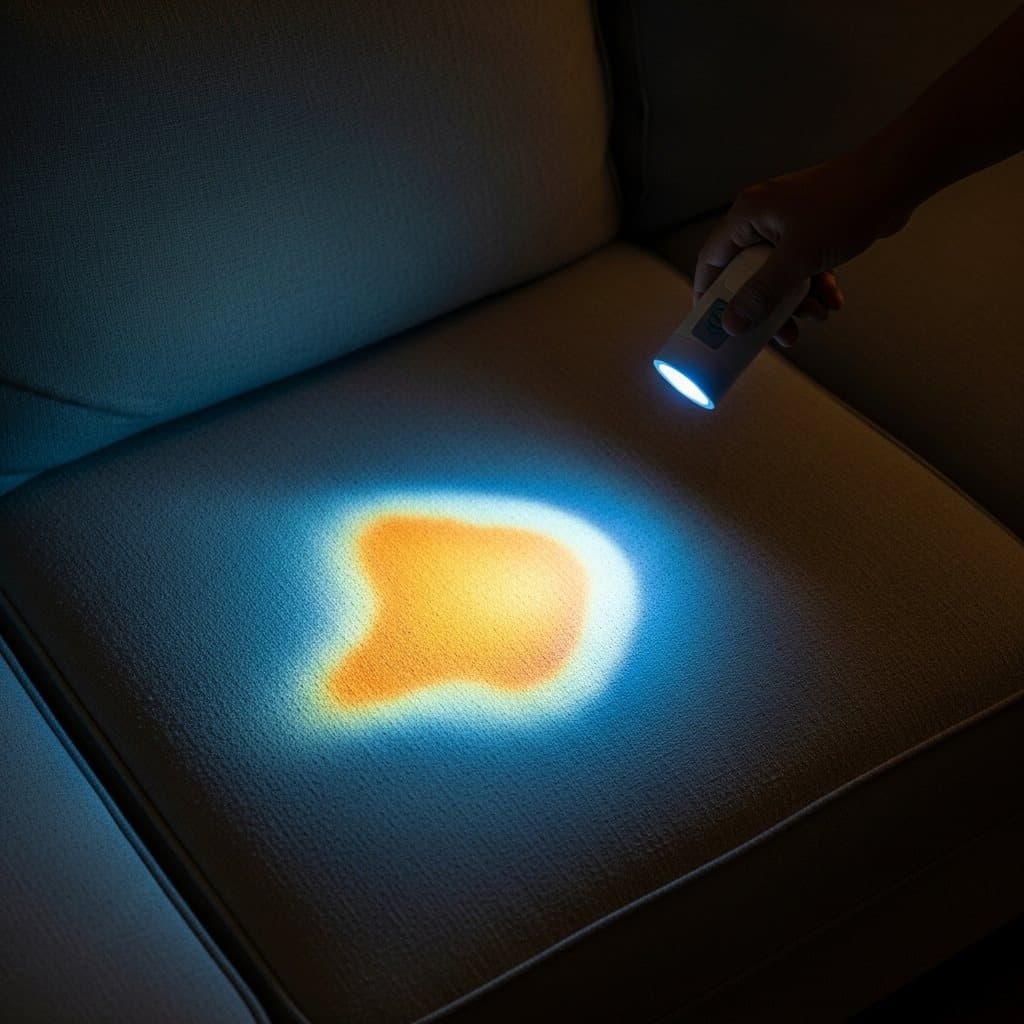
Urine travels. It soaks past the fabric into the foam and fill, and a towel can't reach that. The surface looks clean, and then on a humid day, or when someone sits down and squeezes the cushion, the smell returns. Pets notice it before you do and often go back to the same corner.
Surface cleaning has done all it can at that stage. What's left inside the cushion needs breaking down, and that's the job of our enzyme odor treatment.
Keeping a pet couch in decent shape
Upholstery that isn't loaded with hair and body oil is much easier to spot clean. A few habits that help:
- Vacuum weekly with the upholstery attachment, including the creases and under the cushions.
- Put a washable throw on your pet's favorite spot and wash it every week. Most pets pick one corner and stick to it.
- Wipe paws at the door after a walk or rain.
- Brush your pet regularly. Less shedding means less hair and oil worked into the fabric.
- Rotate and flip cushions now and then so one side doesn't take all the wear.
- Close the blinds during the brightest hours if the couch sits in direct sun. Sun fades fabric unevenly, and faded patches can look like stains.
When to stop and call
Stop the DIY if the tag says S or X, if the stain is old and the smell keeps returning, if the cushion feels damp inside or smells after the surface looks clean, if the piece is vintage or an unusual fabric, or if you've already got rings after careful cleaning. Re-wetting a ring over and over usually makes it more noticeable.
We clean upholstery with very little moisture and dry it evenly, which is how rings are avoided in the first place. Details are on our upholstery cleaning page, and the coupons page has $25 off upholstery. For a second opinion, send the fabric code from the tag and a line about what the pet did through the contact form. We'll write back with what we'd suggest.