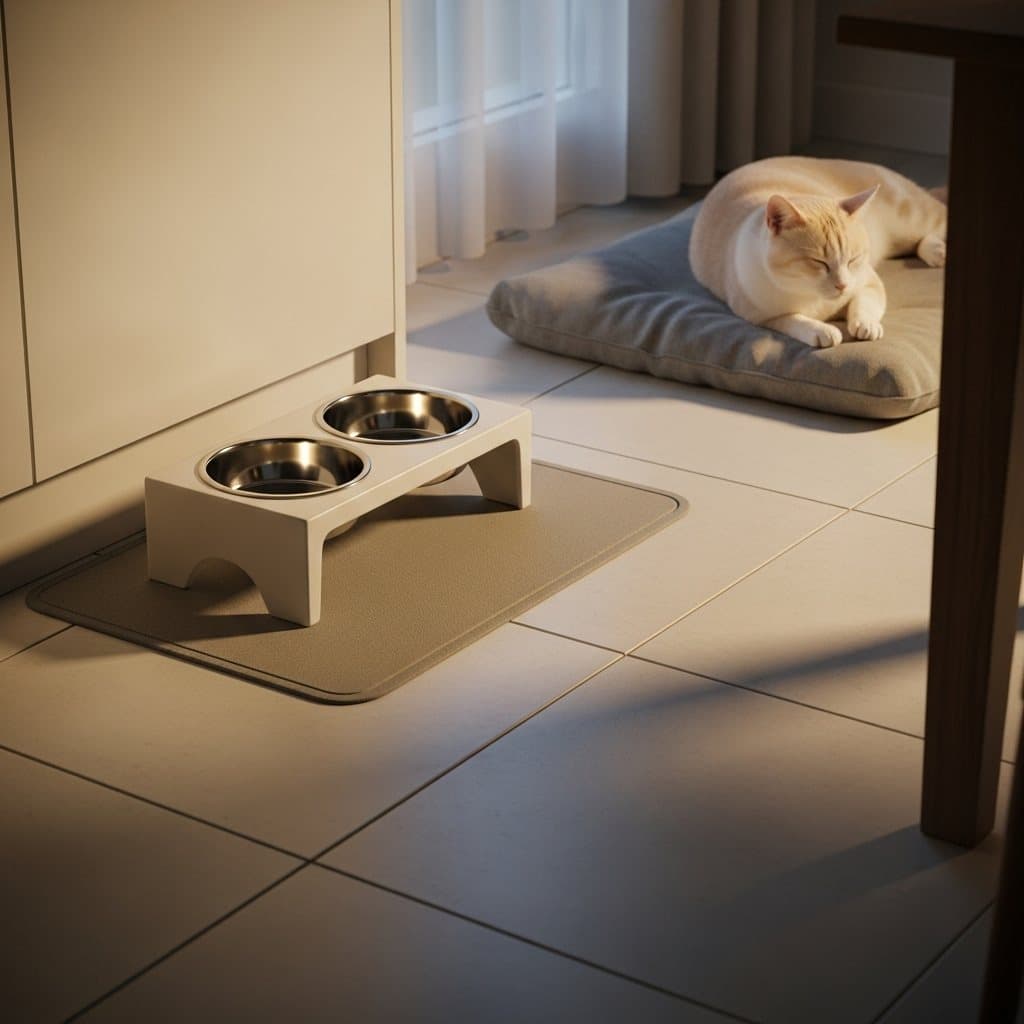
Look at the grout in a two-foot circle around your dog's water bowl. In most pet homes it's the darkest grout in the kitchen, sometimes by a lot. Every drink sends a little water over the rim, the water carries hair and dust into the joints, and the minerals stay behind when it dries. A big dog who drinks like he's bobbing for apples can turn that patch brown in a few months.
Tile is still one of the best floors you can have with pets. Urine sits on top of it for a while before soaking anywhere, claws barely mark it, and a muddy paw print wipes right up. The weak spot is the grout. It's porous, it sits lower than the tile, and it soaks up whatever your animals bring in.
Where pets make grout dirty
There are four main sources, and each one has a simple fix.
Paws bring the outdoors in. After a summer storm, a dog coming in from the yard tracks wet grass, mud, and sand across the kitchen. The grit grinds into the joints with every step, and the mud dries in them. A two-mat setup at the back door catches most of it: a rough mat outside to knock off the big stuff and an absorbent one inside for the rest. Keep an old towel on a hook by the door for wiping paws on wet days, and wash the inside mat often so it doesn't turn into a source of dirt itself.
Food and water stations are the next. Kibble crumbs, wet food, drool, and the water-bowl splash all land in the same few square feet. Put a washable mat under the bowls, wipe the area every day or two, and move the station a few inches now and then so you can clean under it.
Accidents are the one that matters most. Urine soaks into grout quickly, and once it's in the pores, it can smell for a long time, especially on humid days. Pick up solids, blot the liquid with paper towels, then use an enzyme cleaner made for hard floors and give it time to work before you wipe it up. Enzymes break down what's causing the odor. Bleach and strong fragrances don't, and bleach can blotch and weaken grout. If the same spot keeps getting hit, the smell is probably what's drawing your pet back.
Hair and dander are the last. They don't stain much on their own, but they stick to any residue on the floor and roll into the joints along with dust. Daily sweeping with a microfiber dust mop or a quick pass with a hard-floor vacuum takes care of most of it. Regular brushing, and trimming the fur between the toes on long-haired dogs, cuts down on what hits the floor in the first place.
A routine that fits a pet home
You'll see 15-step routines for this all over the internet. Nobody keeps those up for long. Here's the short version that actually moves the needle:
- Sweep or dust-mop daily in the kitchen and entry, every couple of days elsewhere.
- Mop once a week with a pH-neutral tile cleaner, using less than the label says.
- Follow with a clean-water pass to lift any leftover cleaner, so your pet isn't licking it off their paws.
- Dry the floor with a towel or a dry mop, or run the ceiling fan. Wet tile is slick for animals, especially older dogs with weak hips.
- Scrub the grout around bowls, doors, and pet beds with a soft brush every couple of weeks.
A few things to leave out. Skip vinegar on grout, which can wear it down over time, and on natural stone, which it can etch. Skip bleach and ammonia around animals. Skip the pressure washer and any rented high-pressure tile machine, because blasting water into grout weakens it and leaves moisture sitting in the pores.
Washable runners in the busiest pet paths help too. Pick ones with a breathable backing, since some rubber backings trap moisture and leave marks on tile.
When home cleaning stops working
Eventually the grout around the bowls, the back door, and the favorite napping spot stays dark no matter how often you scrub. That's the point where a professional clean makes sense.
Professional tile cleaning from us means a machine buffer. The technician walks the floor with you first and marks the accident spots and the paths your dog wears in. Loose hair and debris get picked up, then the buffer goes over the tile with a cleaning solution, grinding steadily into the grout lines. It reaches packed-in grime that a hand brush won't, without the force of a pressure washer. The products are safe for homes with pets, and the floor is ready for paws again quickly.
If the accidents have also happened on carpet or a rug, mention it. That's a separate problem with its own fix, the enzyme pet treatment for carpet, and it's easy to handle both on one visit.
Most pet homes do well with a professional tile clean every six to twelve months, depending on how many animals you have and how much time they spend outside. A single cat who never leaves the house can stretch it. Two labs and a pond in the backyard probably can't.
The habit that helps most, though, is the cheapest one. Put the towel by the back door and use it every time the dog comes in wet. If the grout has already gotten away from you, call 803-310-3848 and describe where the dark spots are.